
 EN
EN
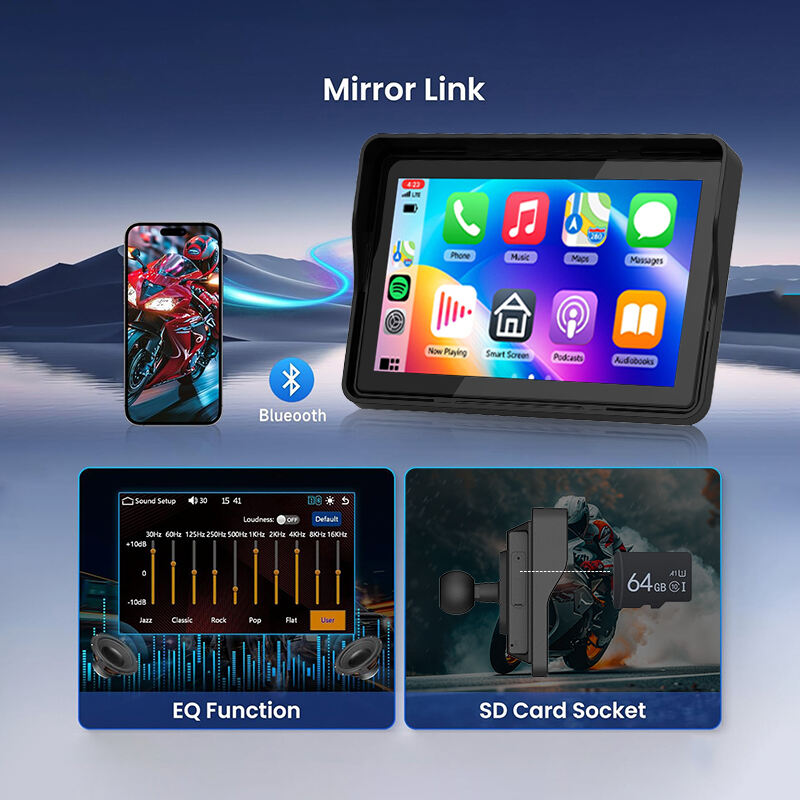
Modern motorcycles are rapidly evolving to incorporate advanced technology that enhances both safety and convenience for riders. Among the most significant developments in recent years is the integration of motorcycle touchscreens that support Android Auto connectivity. These sophisticated display systems transform the riding experience by providing seamless access to navigation, communication, and entertainment features directly from the motorcycle's dashboard. As riders increasingly demand connectivity solutions that mirror their smartphone capabilities, manufacturers are responding with innovative touchscreen interfaces designed specifically for the unique challenges of motorcycle environments.
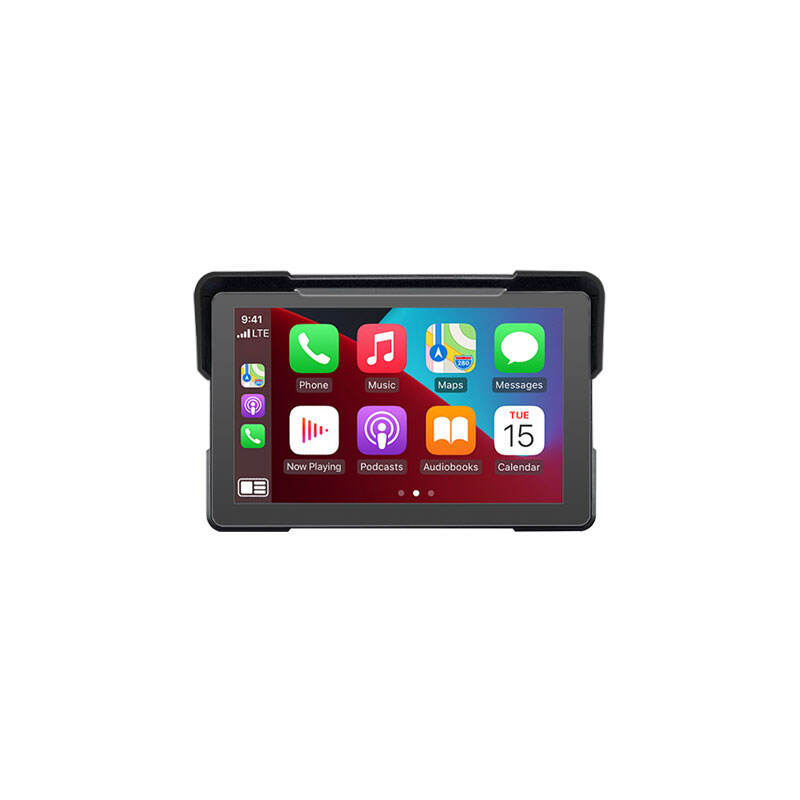
The integration of Android Auto support in motorcycle touchscreens represents a paradigm shift in how riders interact with their vehicles. Unlike traditional automotive applications, motorcycle-specific implementations must account for factors such as vibration resistance, weather protection, and glove-friendly operation. These specialized displays offer riders the ability to access Google Maps navigation, make hands-free calls, send voice messages, and control music playback without compromising their focus on the road ahead.
Advanced Display Technology for Two-Wheeled Vehicles
High-Resolution Screen Specifications
Contemporary motorcycle touchscreens feature high-resolution displays that remain clearly visible under various lighting conditions. Premium models typically incorporate IPS LCD or OLED technology with brightness levels exceeding 1000 nits, ensuring excellent readability even in direct sunlight. The screen sizes generally range from 5 to 10 inches, with larger displays providing more comprehensive information while maintaining ergonomic accessibility for riders wearing protective gear.
Color accuracy and contrast ratios are particularly crucial for motorcycle touchscreens operating in outdoor environments. Advanced models utilize anti-glare coatings and adaptive brightness sensors that automatically adjust display intensity based on ambient light conditions. This technology ensures that critical navigation and safety information remains visible regardless of weather conditions or time of day.
Durability and Environmental Protection
Motorcycle environments present unique challenges that standard automotive displays cannot withstand. Leading touchscreen systems incorporate IP67 or higher waterproof ratings, protecting internal components from rain, snow, and pressure washing. The housing materials typically feature aircraft-grade aluminum or reinforced polymer construction designed to absorb vibrations and resist impact damage from road debris.
Temperature tolerance represents another critical specification, with premium motorcycle touchscreens operating reliably in conditions ranging from -20°C to 70°C. This extended temperature range ensures consistent performance during winter storage and summer riding in extreme climates. Additionally, UV resistance prevents screen degradation and color fading that can occur with prolonged sun exposure.
Android Auto Integration and Connectivity Features
Seamless Smartphone Synchronization
Android Auto compatibility transforms motorcycle touchscreens into powerful communication hubs that mirror essential smartphone functions. The wireless connection protocol eliminates the need for physical cable connections, reducing wear on charging ports and providing cleaner handlebar aesthetics. Once paired, the system automatically connects when the rider starts the motorcycle, launching a simplified interface optimized for motorcycle operation.
The synchronization process encompasses contacts, music libraries, navigation preferences, and messaging applications. Advanced systems support multiple user profiles, allowing different riders to access their personalized settings and preferences. Voice recognition technology enables hands-free operation of most functions, reducing the need for manual touchscreen interaction while riding.
Navigation and Mapping Capabilities
Google Maps integration through Android Auto provides motorcycle-specific routing options that consider factors such as road surface conditions, traffic congestion, and scenic routes. The navigation interface displays turn-by-turn directions with large, easily readable text and arrow indicators. Advanced systems incorporate real-time traffic updates and alternative route suggestions to help riders avoid congested areas.
Offline mapping functionality ensures navigation availability in areas with limited cellular coverage. Riders can download regional maps before departing on long-distance tours, maintaining access to detailed routing information throughout their journey. The GPS accuracy typically exceeds civilian-grade standards, providing precise location tracking for both navigation and security purposes.
Safety Features and Rider-Focused Design
Glove-Compatible Touch Response
Motorcycle touchscreens incorporate capacitive touch technology specifically calibrated for operation with motorcycle gloves. The sensitivity settings account for the reduced precision and increased contact area when wearing protective gear. Button sizes and spacing follow ergonomic guidelines that accommodate gloved fingers while minimizing accidental input errors.
Multi-touch gestures support common operations such as zooming maps and scrolling through menu options. However, the interface design prioritizes single-touch actions for primary functions, reducing the complexity of gloved operation. Physical control integration allows riders to access essential features through handlebar-mounted buttons, providing tactile feedback that complements the touchscreen interface.
Voice Command Integration
Advanced voice recognition systems enable hands-free control of most motorcycle touchscreen functions. The microphone arrays incorporate noise cancellation technology designed specifically for motorcycle environments, filtering out wind noise and engine sounds while maintaining clear voice recognition accuracy. Riders can initiate navigation, make phone calls, send messages, and control media playback through natural language commands.
The voice command vocabulary includes motorcycle-specific terminology and routing preferences. For example, riders can request scenic routes, avoid highways, or find nearby fuel stations using conversational phrases. The system learns individual speech patterns over time, improving recognition accuracy and reducing false command interpretations.
Installation and Compatibility Considerations
Universal Mounting Solutions
Modern motorcycle touchscreens offer versatile mounting options that accommodate various handlebar configurations and riding positions. Universal mounting brackets feature adjustable angles and positioning mechanisms that optimize screen visibility for different rider heights and motorcycle geometries. The mounting hardware typically includes vibration dampening materials that isolate the display from engine and road vibrations.
Cable management systems ensure clean installations while protecting wiring from weather exposure and mechanical damage. Many systems feature quick-release mechanisms that allow riders to remove the display for security purposes or when performing maintenance. The electrical connections utilize weatherproof connectors that maintain reliable power and data transmission under adverse conditions.
Power Management and Battery Integration
Efficient power management extends operating time and reduces strain on motorcycle electrical systems. Advanced touchscreens incorporate sleep modes and adaptive brightness controls that minimize power consumption during extended use. Battery backup systems provide continued operation during engine shutdown, preventing data loss and maintaining system availability for post-ride activities.
The power requirements typically range from 12 to 24 volts, making these systems compatible with most motorcycle electrical configurations. Smart charging algorithms prevent overcharging and optimize battery longevity. Some models include USB charging ports that allow riders to charge mobile devices directly from the touchscreen unit.
Future Technology Trends and Developments
Artificial Intelligence Integration
Emerging motorcycle touchscreens incorporate artificial intelligence algorithms that learn rider preferences and provide predictive assistance. These systems analyze riding patterns, frequently visited locations, and preferred routes to offer proactive suggestions and automated configuration adjustments. Machine learning algorithms continuously refine voice recognition accuracy and reduce false command interpretations.
AI-powered safety features include collision avoidance alerts, blind spot monitoring integration, and predictive maintenance notifications. The systems process data from multiple sensors to provide comprehensive situational awareness and early warning systems. Advanced models integrate with motorcycle stability control systems to provide coordinated safety responses.
Enhanced Connectivity Protocols
Next-generation motorcycle touchscreens will support 5G connectivity and vehicle-to-everything communication protocols. These advanced networking capabilities enable real-time traffic optimization, cooperative awareness messaging, and enhanced emergency response coordination. The increased bandwidth supports high-definition mapping updates and cloud-based processing for computationally intensive applications.
Blockchain integration provides secure data storage and rider identity verification for shared motorcycle systems and rental applications. The distributed ledger technology ensures data integrity and provides tamper-proof maintenance records. Smart contract functionality enables automated service scheduling and warranty management.
FAQ
How do motorcycle touchscreens perform in extreme weather conditions
High-quality motorcycle touchscreens are specifically engineered to withstand extreme weather conditions through advanced environmental protection features. These systems typically carry IP67 or IP68 waterproof ratings, meaning they can withstand heavy rain, snow, and even temporary submersion. The displays incorporate anti-glare coatings and adaptive brightness technology that automatically adjusts screen intensity to maintain visibility in bright sunlight or low-light conditions. Temperature tolerance ranges from -20°C to 70°C ensure consistent operation during winter storage and summer riding in desert climates.
Can I use motorcycle touchscreens while wearing thick winter gloves
Modern motorcycle touchscreens feature capacitive touch technology specifically calibrated for gloved operation, including thick winter gloves. The sensitivity settings are optimized to detect input through various glove materials and thicknesses while maintaining accuracy and preventing false touches. Button sizes and spacing follow ergonomic guidelines that accommodate reduced finger dexterity when wearing protective gear. Many systems also provide physical control alternatives through handlebar-mounted buttons for essential functions, ensuring reliable operation regardless of glove type or weather conditions.
What are the power requirements for installing a motorcycle touchscreen system
Motorcycle touchscreens typically operate on 12 to 24-volt electrical systems, making them compatible with most modern motorcycles. Power consumption ranges from 10 to 30 watts depending on screen size and feature complexity. Installation requires a stable power connection to the motorcycle's electrical system, usually through the accessory power circuit or directly to the battery with appropriate fusing. Many systems include intelligent power management features that automatically enter sleep mode when the engine is off to prevent battery drain, and some models incorporate backup batteries for continued operation during brief power interruptions.
How secure are Android Auto connections on motorcycle touchscreens
Android Auto connections on motorcycle touchscreens utilize encrypted communication protocols that provide robust security for data transmission between smartphones and display units. The wireless connection employs WPA3 security standards and certificate-based authentication to prevent unauthorized access. Personal data such as contacts, messages, and location information remains stored on the connected smartphone rather than the motorcycle system, reducing privacy risks. Advanced systems incorporate additional security features such as PIN-based access controls and automatic session timeouts to protect sensitive information if the motorcycle is accessed by unauthorized individuals.

